
With digital lens surfacing (a.k.a. freeform) one or both surfaces of a lens can be completely specified by the Lens Design System (LDS). For example the LDS can provide a height map, giving points on a grid of some chosen spacing. This surface will be produced with very high accuracy by the generator.
The optical performance of a freeform lens when used in spectacles is difficult to predict. Either the lens must be manufactured and analyzed with a complex apparatus that can measure optical properties for a range of realistic view directions, or the lens must be simulated computationally using sophisticated ray-tracing algorithms.
FormuLens utilizes our SimuLens ray-tracing program to perform this measurement.
For example the following are simulated sphere and cylinder maps from a realistic Progressive Addition Lens (PAL) with plano Rx:
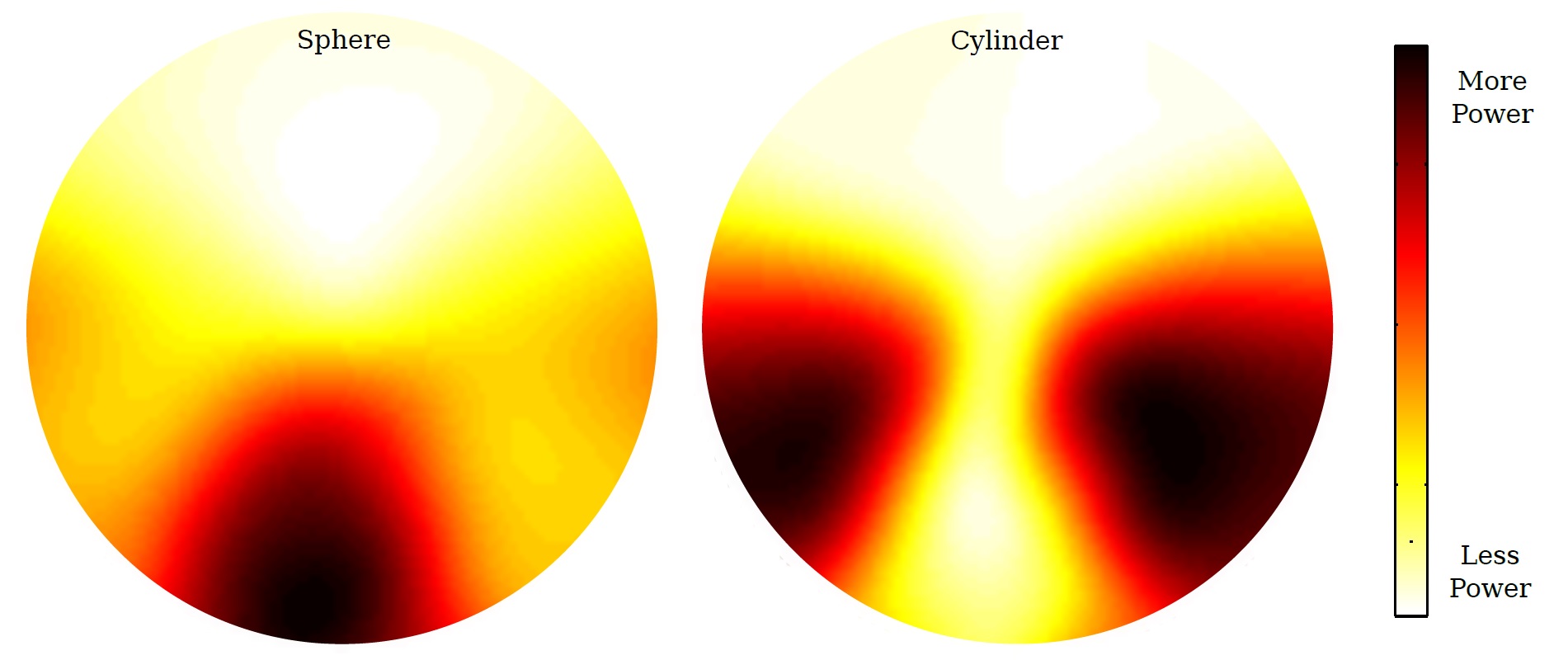
PALs have certain common requirements, based on the optical performance when the patient’s view utilizes different regions of the lens while worn:
- A large distance viewing region (a.k.a. Far Zone) which provides clear vision at the patient Rx.
- A reading region (a.k.a. Near Zone) which has more sphere power, or Add, in addition to the patient’s Rx power.
- A progressive channel (a.k.a. corridor) of smoothly varying power, increasing from the patient’s Rx at the Far Zone, to the Add power at the Near Zone.
These regions are indicated in the plano PAL simulation below:
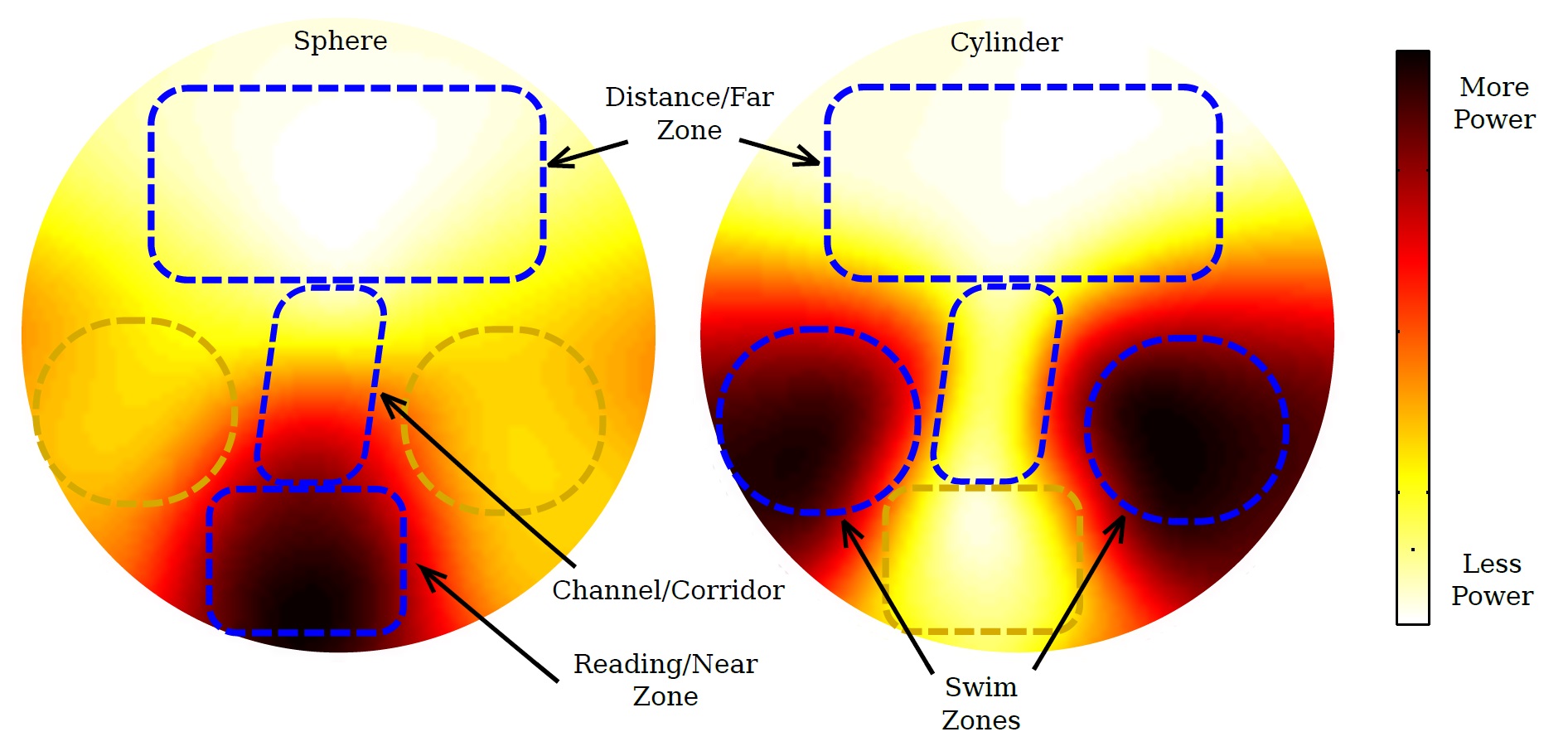
Also indicated in the simulation above are “Swim Zones”, to the sides of the Near Zone, which are unavoidable side-effects of progressive lenses. These regions contain large amounts of astigmatism (hence the high Cylinder value there), as well as other unwanted properties such as visual distortion (the “Swim”). A key goal of PAL design is the minimization/mitigation of these effects.
Overall, PAL design requires a number of trade-offs, such as controlling the value of Swim while achieving desirable sizes for the clear zones and the channel.
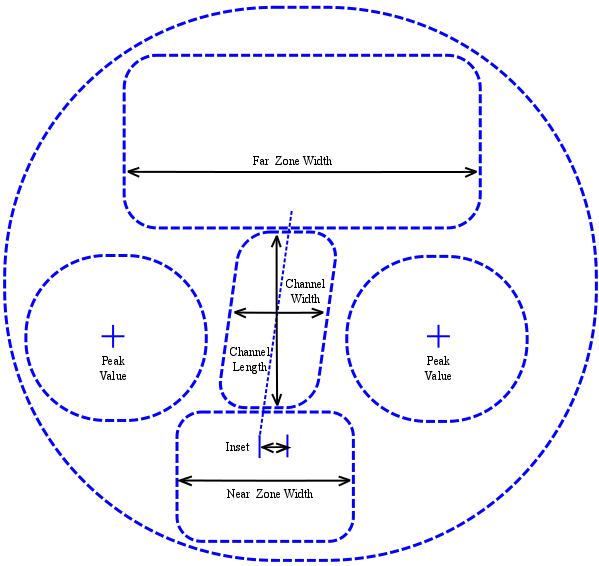
FormuLens uses our SimuLens ray-tracing program, coupled with advanced numerical algorithms, to optimize each design for any possible design requirements, potentially in real-time, to create completely customized designs.